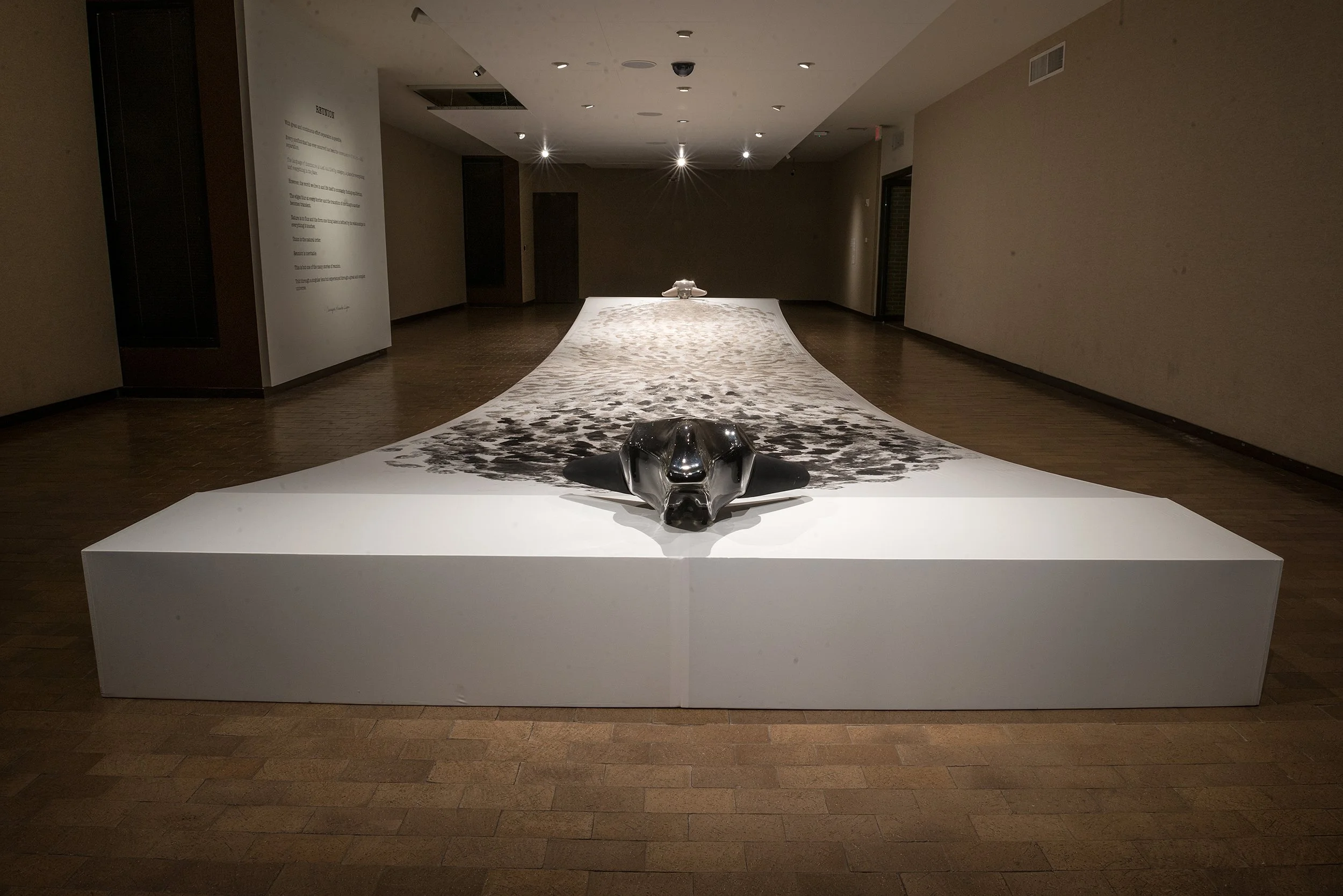
Transmutation (2022)
When the US Army lost in battle against the Plains Tribes, of which I am a descendent, a different type of war was waged against us. With aims to decimate our food supply and way of life, soldiers and settlers orchestrated a full-on massacre of the buffalo. General Sherman was a proponent of this plan; in 1869, the Army Navy Journal reported him saying, “the quickest way to compel the Indians to settle down to civilized life was to send ten regiments of soldiers to the plains, with orders to shoot buffaloes until they became too scarce to support the redskins." Between 1845 and 1895, an estimated 60 million buffalo were slaughtered; with the survival of a mere 500 animals, this was genocide.
This war of attrition took its toll on my people and other Plains Tribes. The crash in buffalo population represented not only a dietary impact, but also a loss of spirit, land, and Indigenous autonomy. The loss was tremendous, unfathomable, and inhumane. With the disappearance of the buffalo, we were forced to become more dependent on settler economies and were forced onto reservations. Tribal land was seized, parceled, and fenced.
The late 19th century was a time of western expansion and settlers were easily incentivized to kill buffalo as a way to clear land for settlement. A bounty was put on buffalo -- every dead buffalo symbolized a dead Indian. Therefore, teams of hunters roamed the Plains, killing up to 1000 buffalo in a single day. The liquidation of buffalo not only subjugated the tribes but made space for railroads, towns, and the advent of private property, all of which in turn aided in the buffalo’s further demise. Without these wide-ranging herds -- who migrated cross-continental distances -- “American Progress” was unhindered.
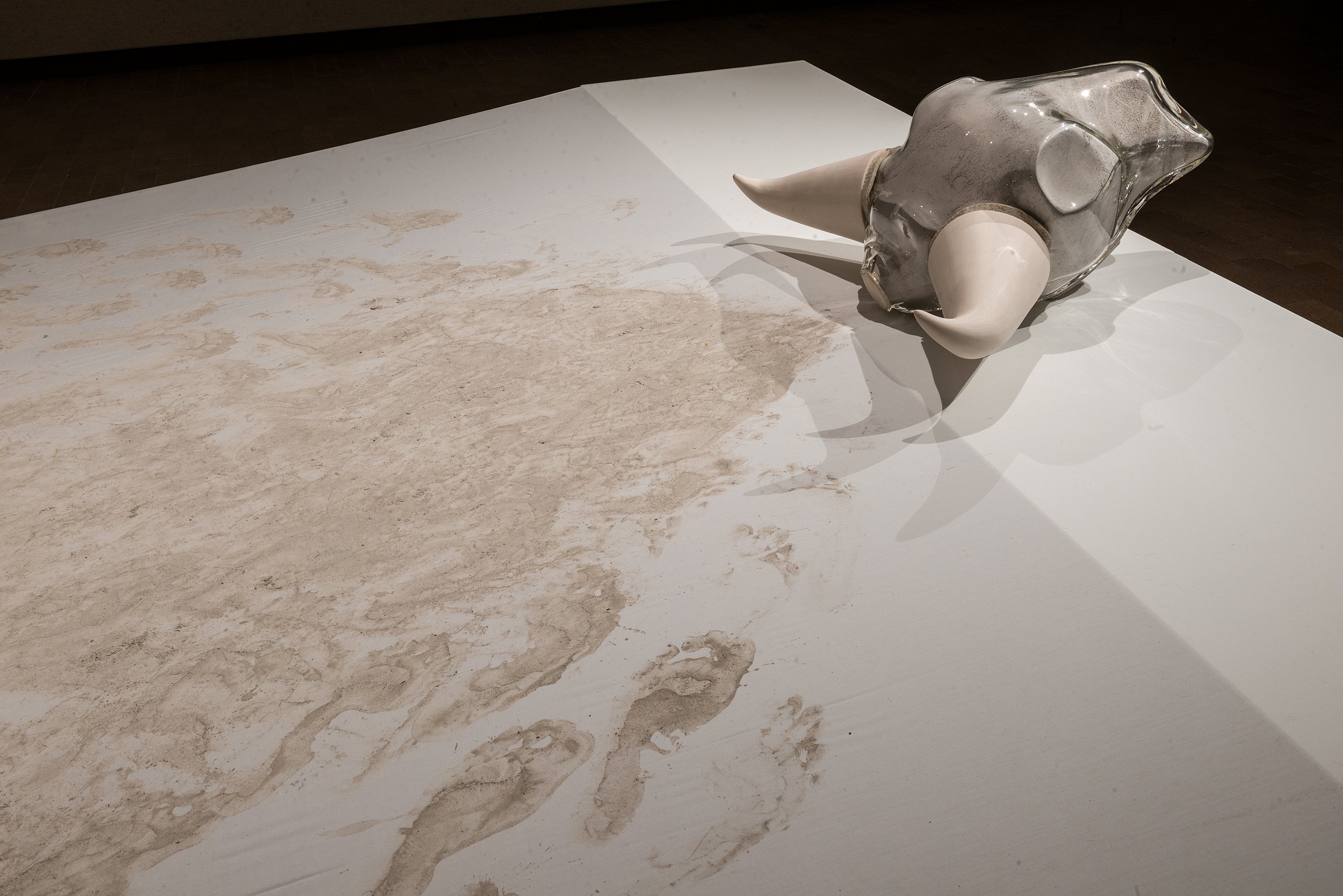
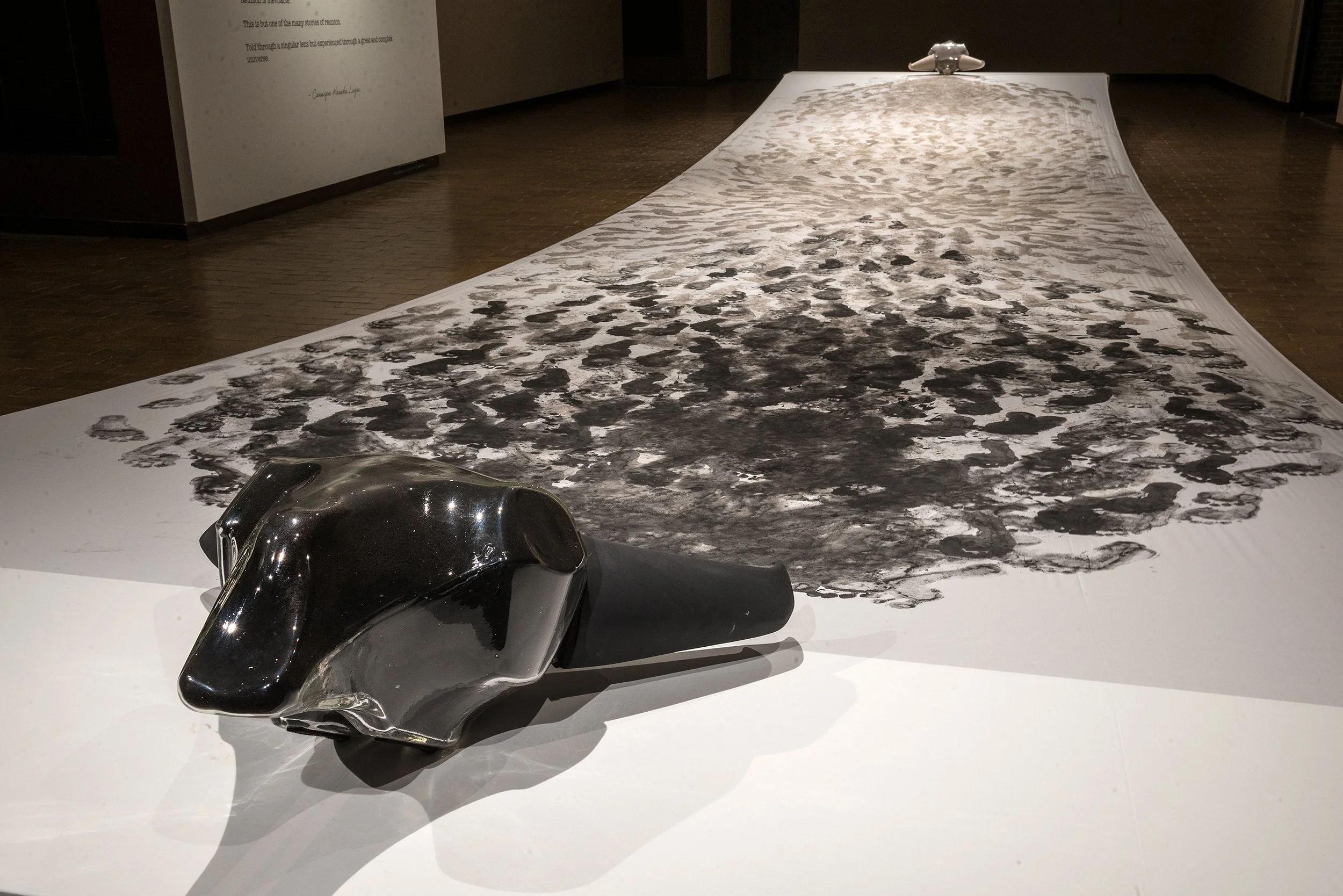
An entire economy grew up around the buffalo’s annihilation. Their hides were valuable and new railroads helped move the goods to urban centers and to Europe. As a result, bones piled up around rail lines. Hunters and settlers came to a bone-scattered West that reportedly “looked like the Valley of Death.” Where bones covered the ground, bounty hunters collected them into massive piles to be transported, processed and incinerated. Buffalo bones were turned into “bone black” pigments; they were ground up and used in bone china. Buffalo bones were transformed into calcium carbonate, a slow-releasing fertilizer that assisted in the spread of Plains farming. Calcium bicarbonate is also highly important to steel production and played a critical role in the US domination of global markets during the Industrial Revolution. The historic images of this era document towering pyramids of buffalo skulls; these are testaments to settler might and monuments of conquest. They communicated a warning to Native people, a haunting commitment to our destruction.
The loss of this majestic species not only affected my Great Plains ancestors but also the land. Running down the center of North America, these prairies and grasslands are some of the most endangered environments on our continent. For instance, many Indigenous grasses are dependent on the buffalo to thrive and have therefore also degenerated. Buffalo helped to germinate the grasses; with their disappearance the prairies are also endangered. In fact, there can be no true restoration without roaming herds of buffalo. But with the development of the West and the proliferation of fences, buffalo can no longer roam long distances. Transmutation acknowledges the accumulation of loss, the entropy of societal waste, and the cascading effects of a decimated species on our precious and interconnected environment.
What was lost during the war of attrition? What was gained? How have human societies evolved in the absence of buffalo? Transmutation considers all of these stories and questions, creating a space of healing and interspecies accountability.
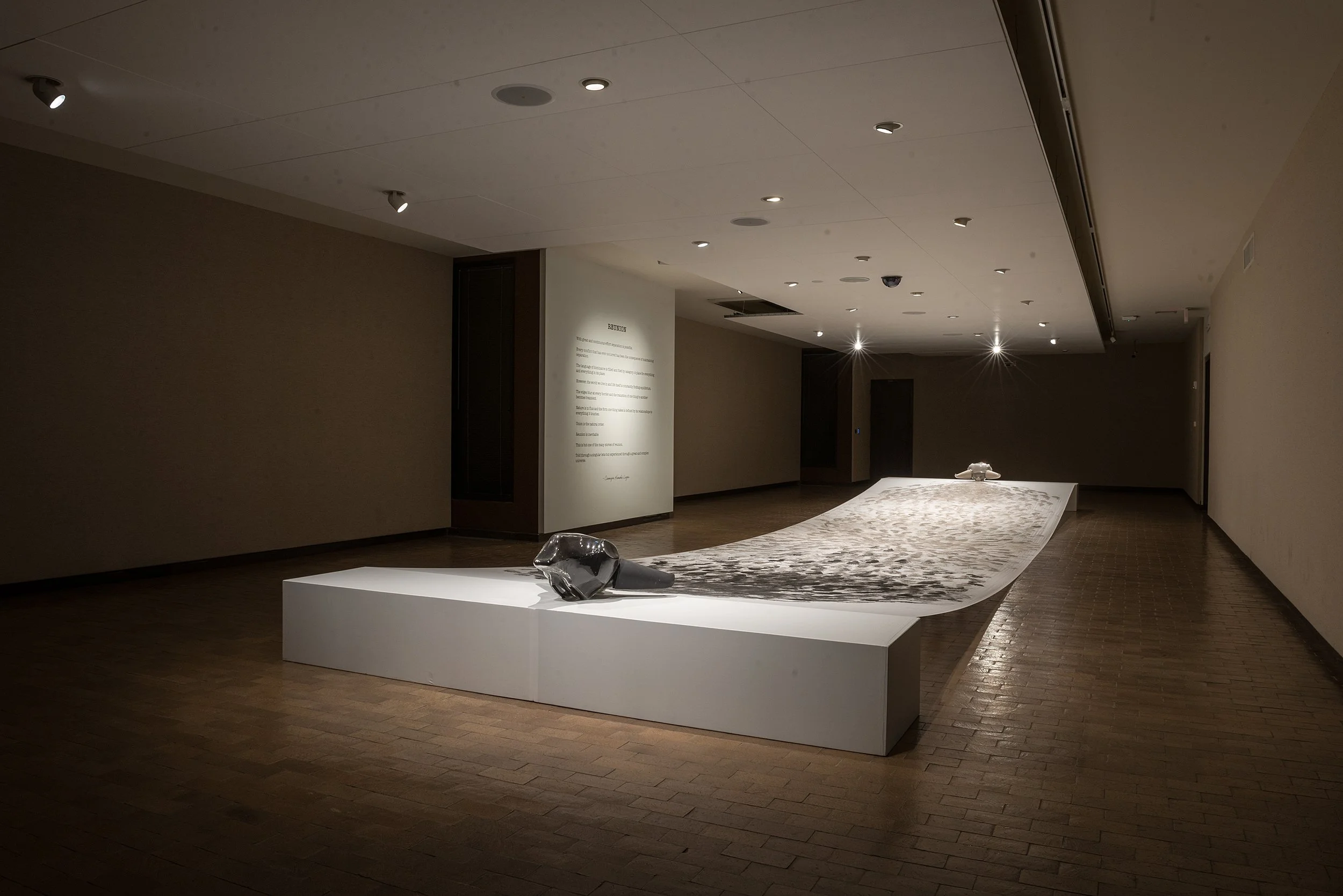
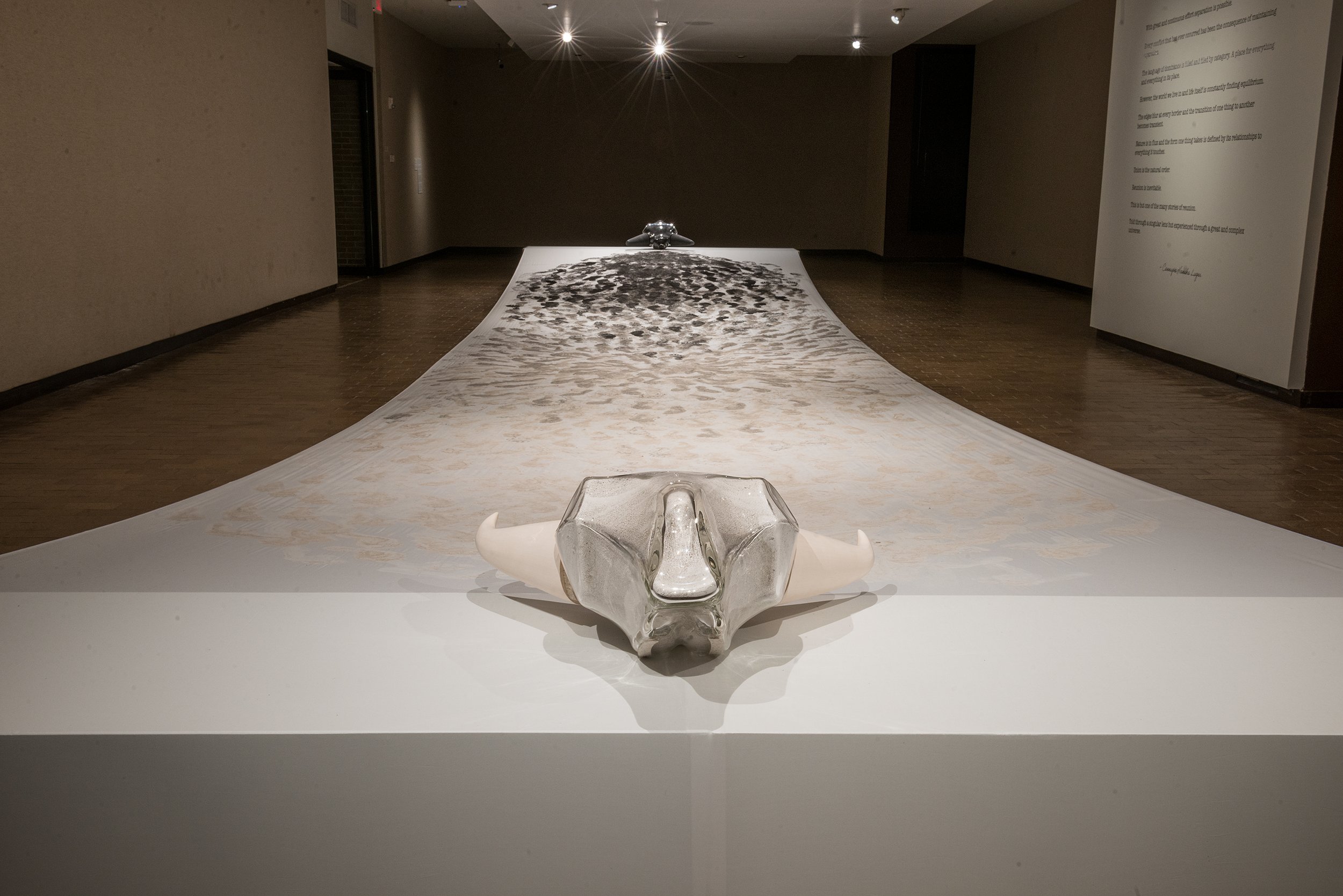
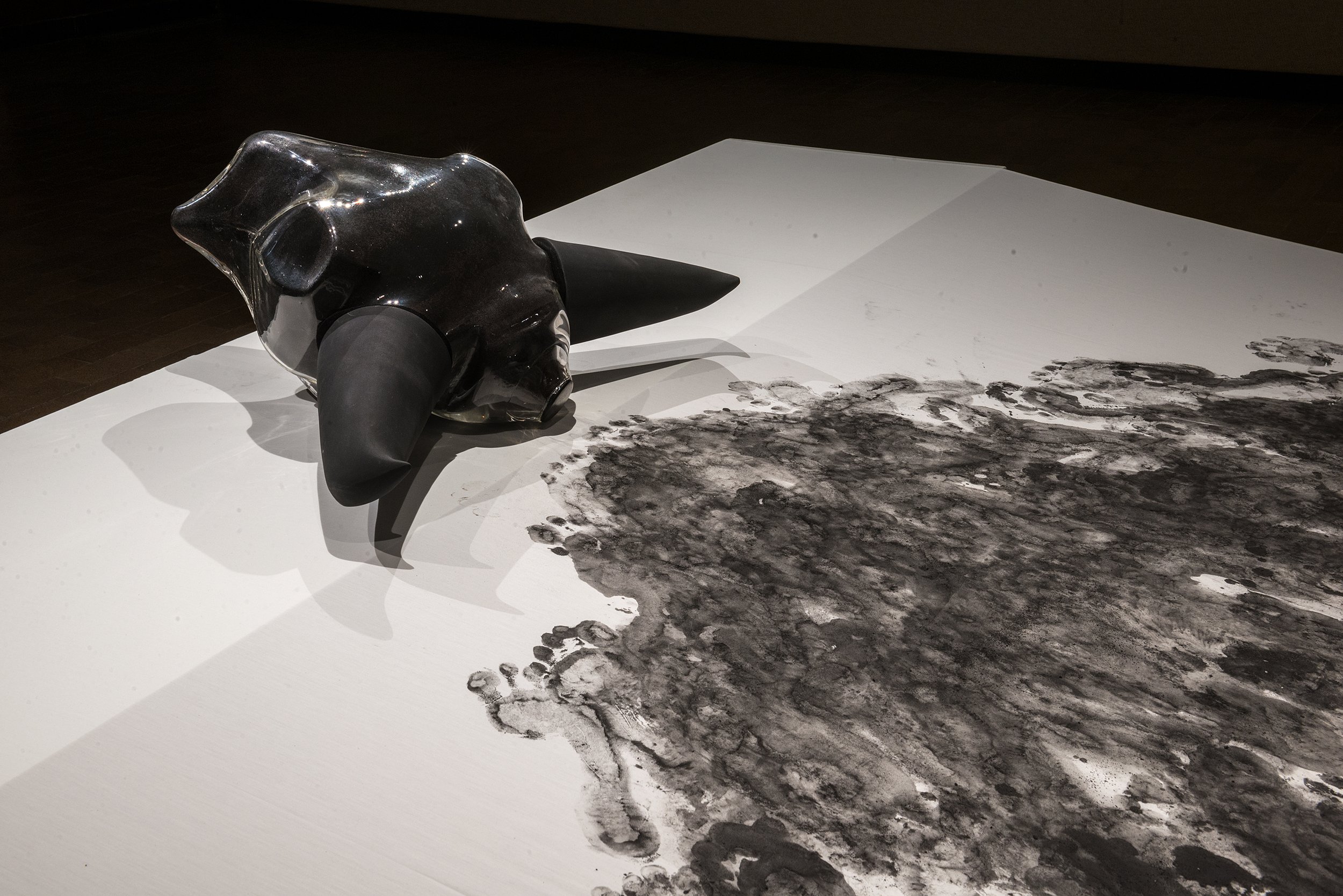
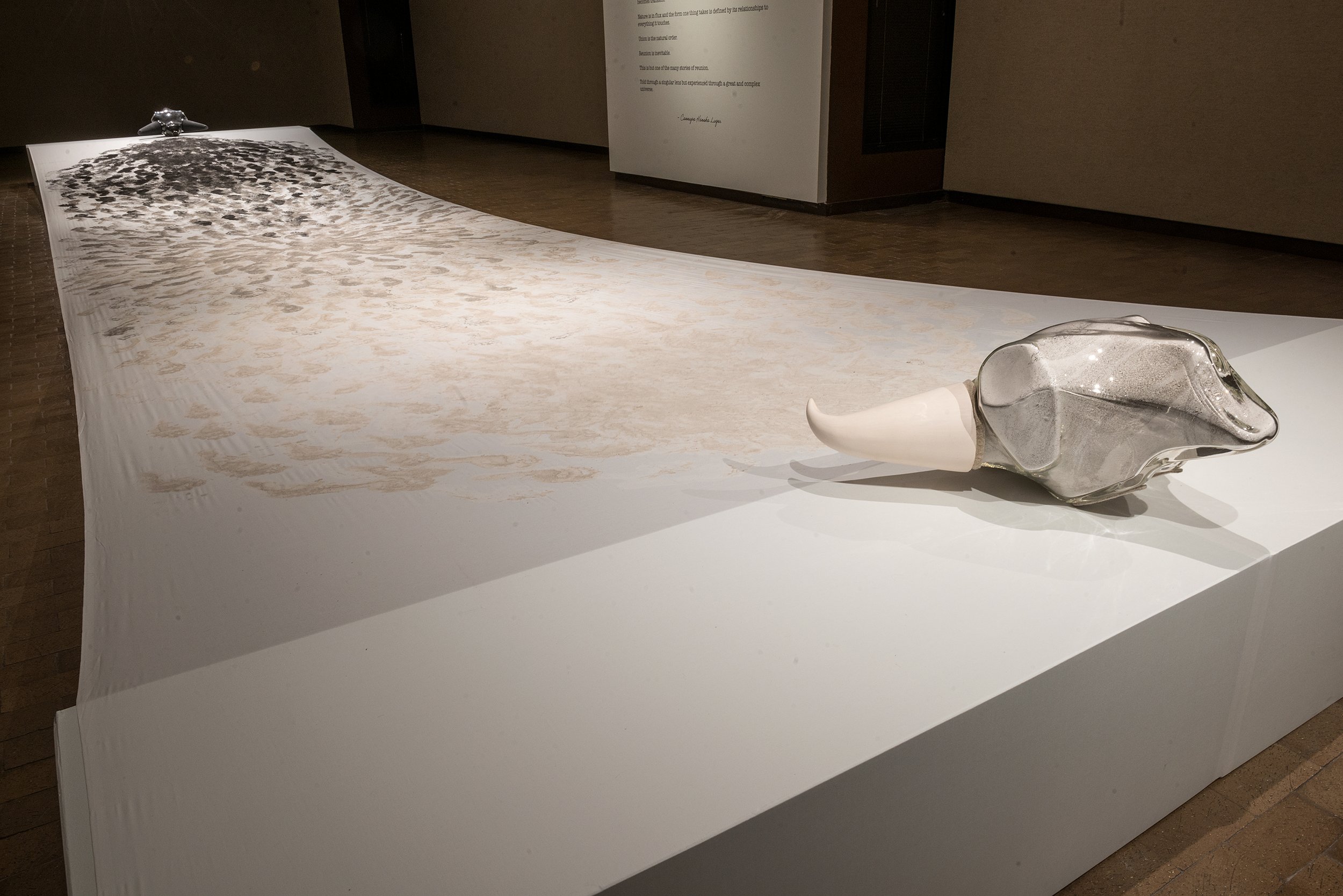
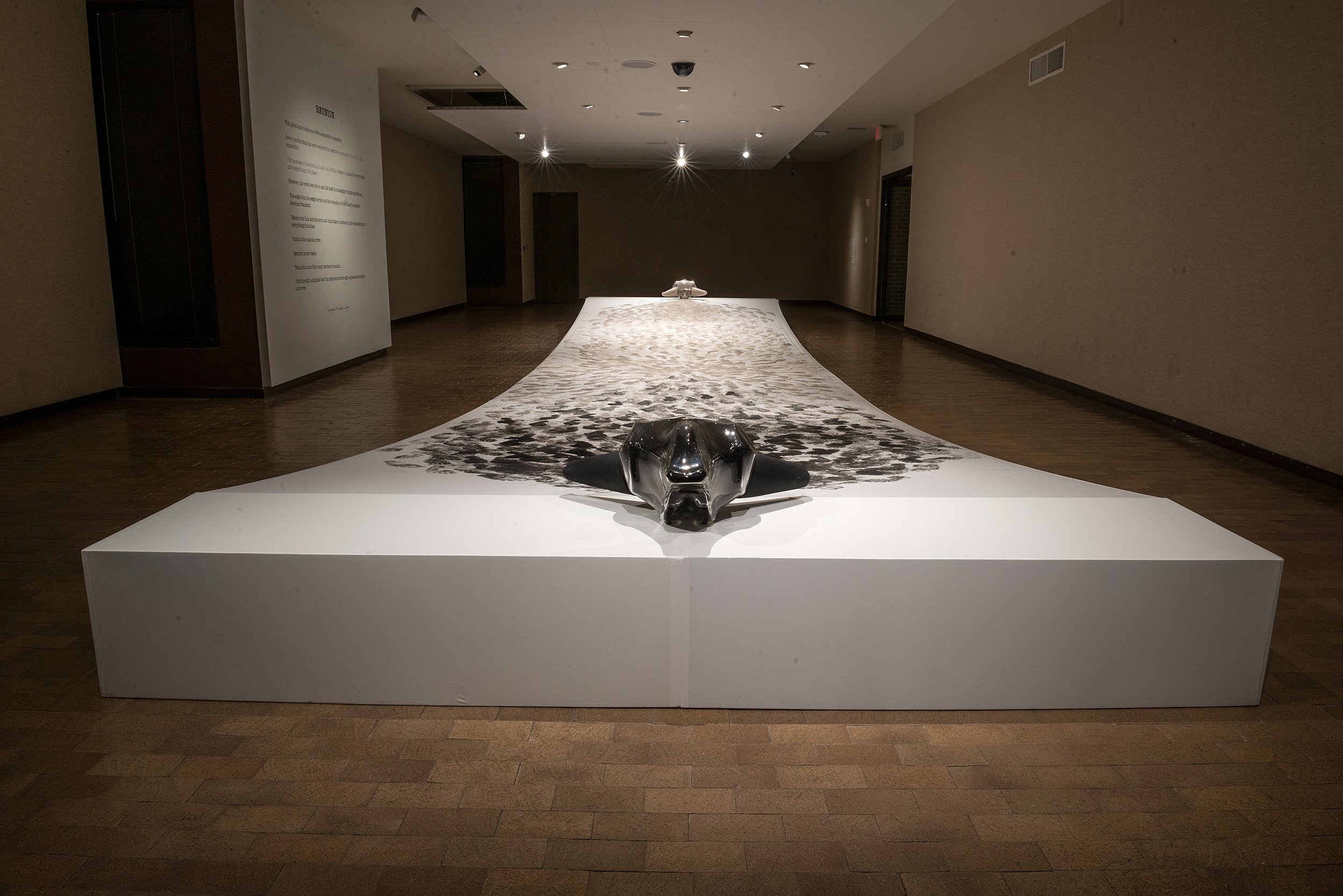
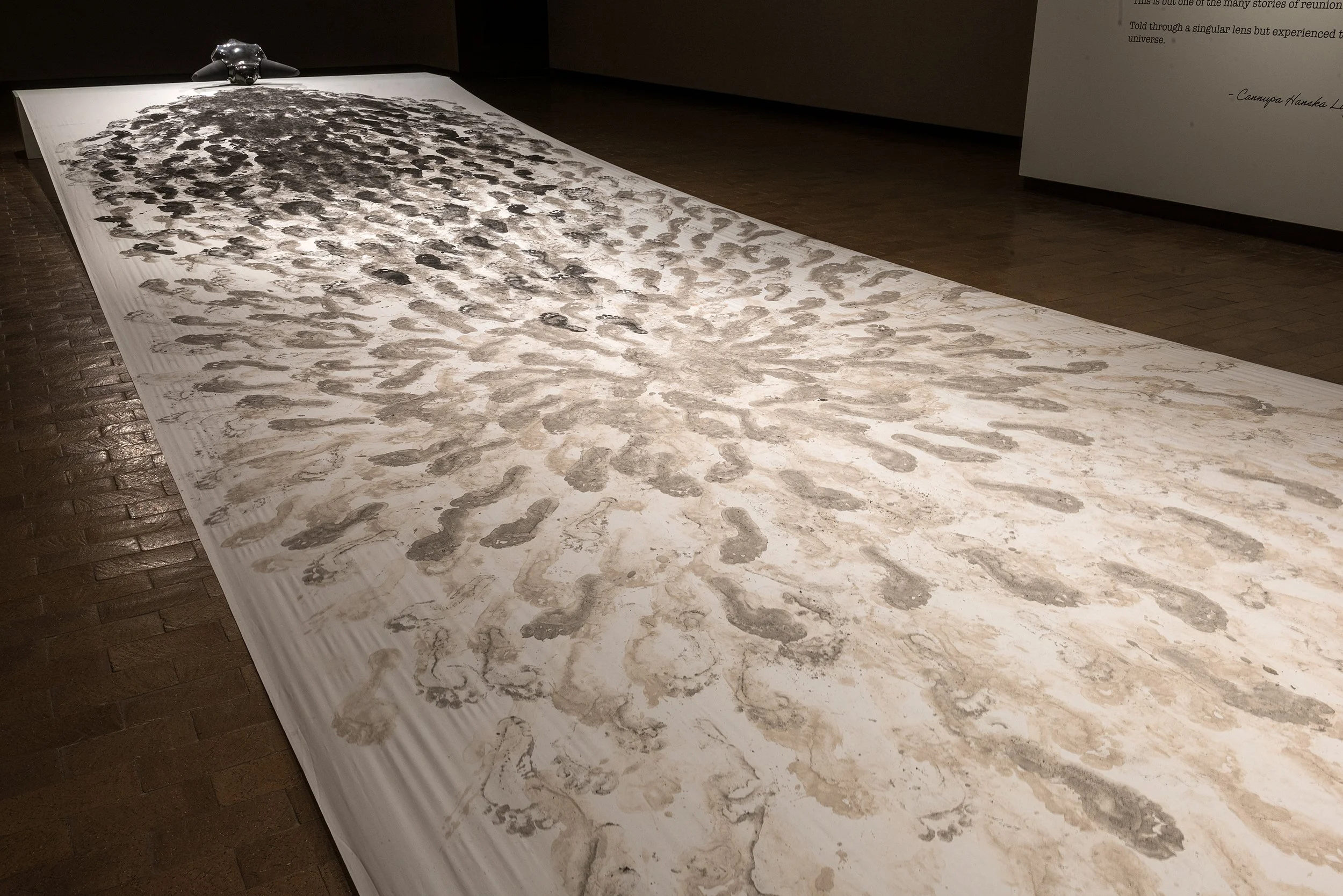
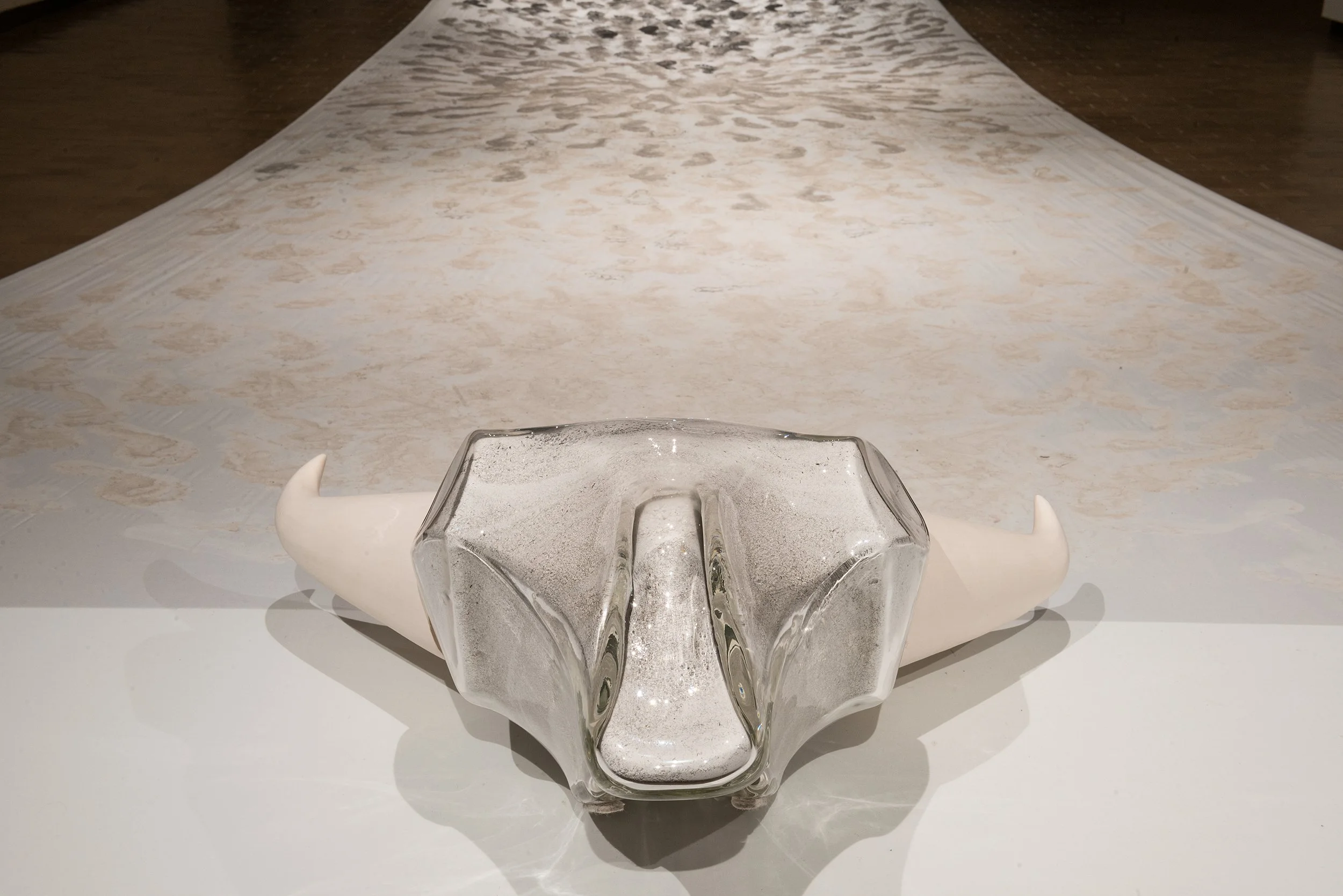
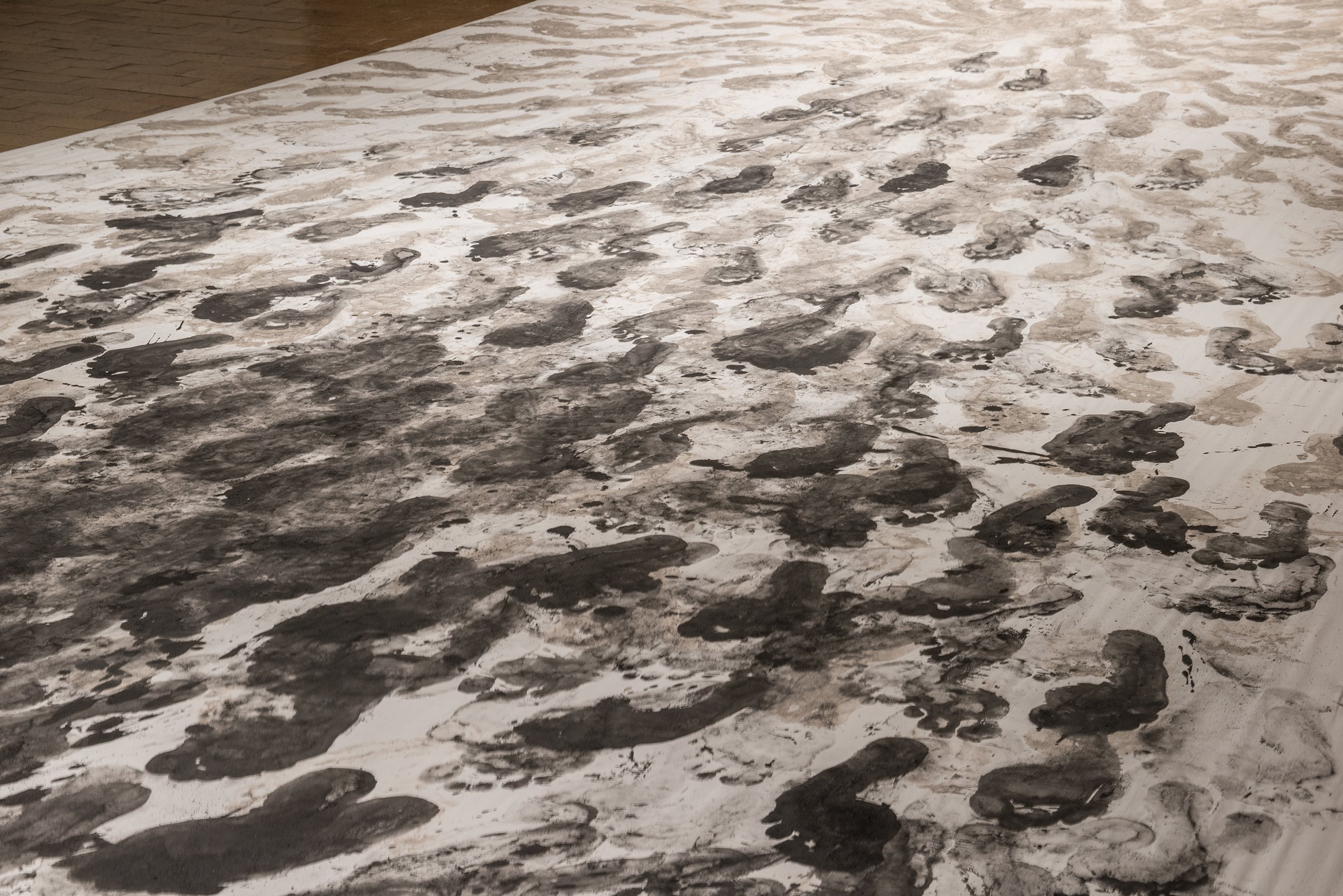
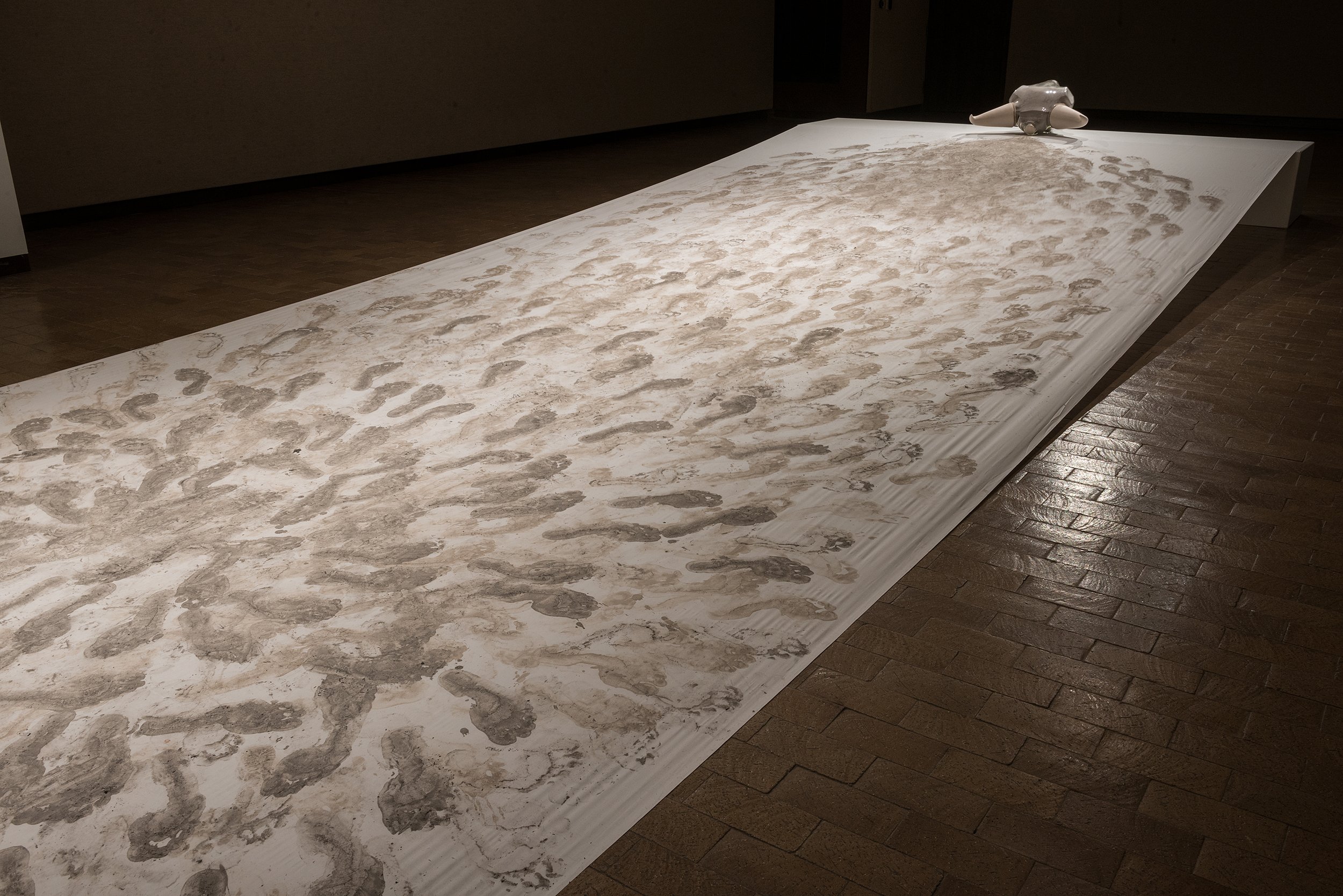
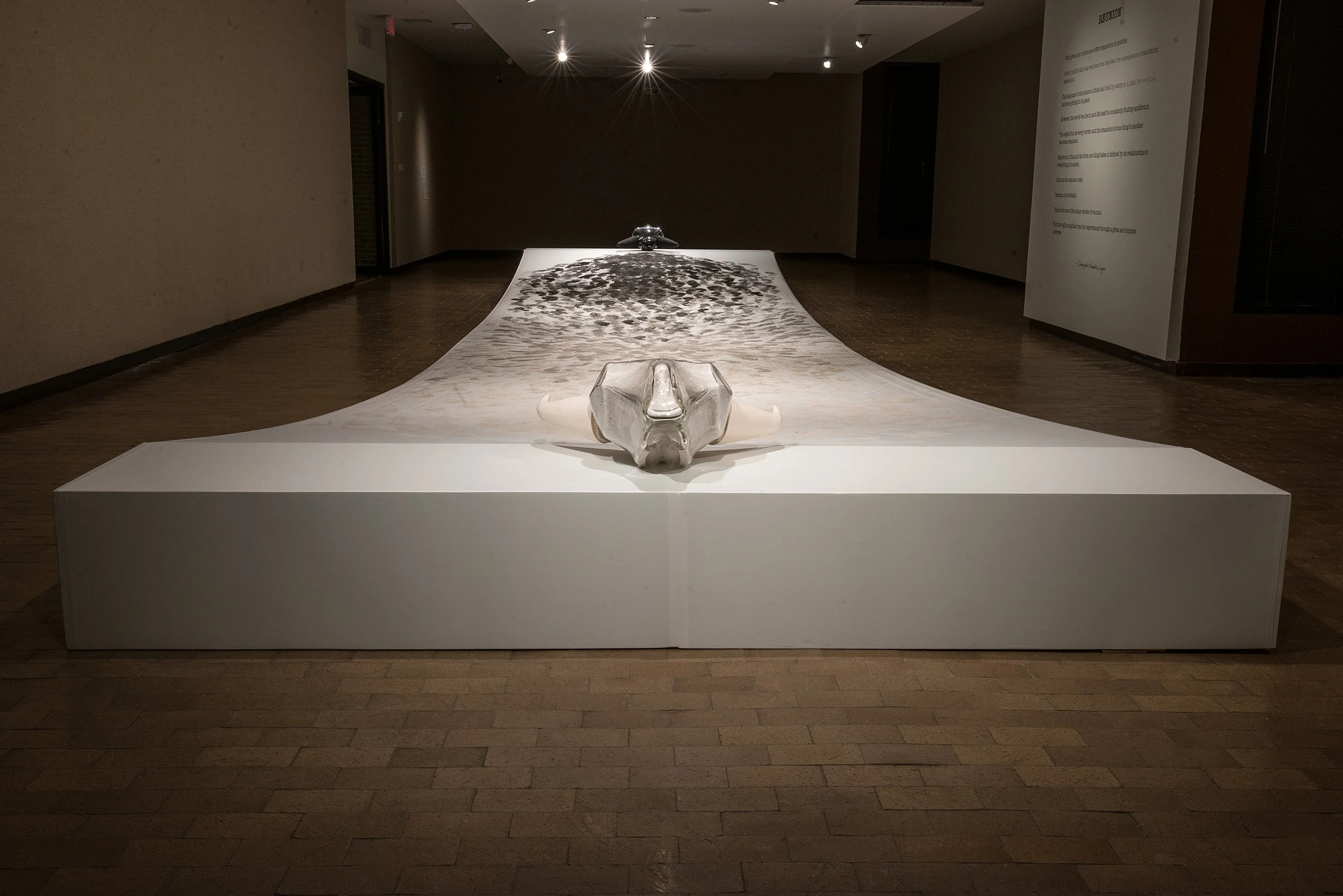
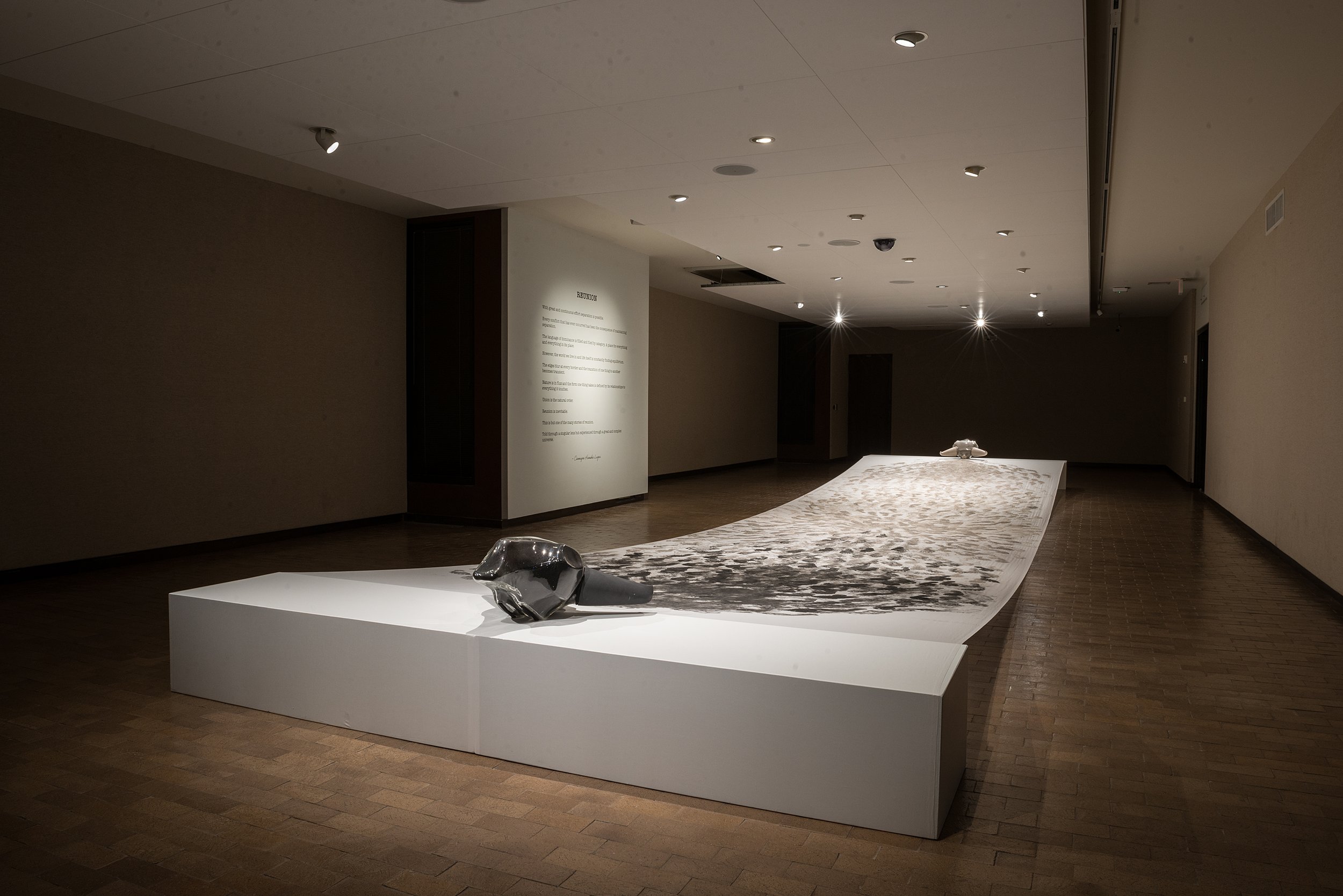
Transmutation
Cannupa Hanska Luger, 2022
ceramic, glass, linen, felt, calcium carbonate and bone-black pigments, sound installation
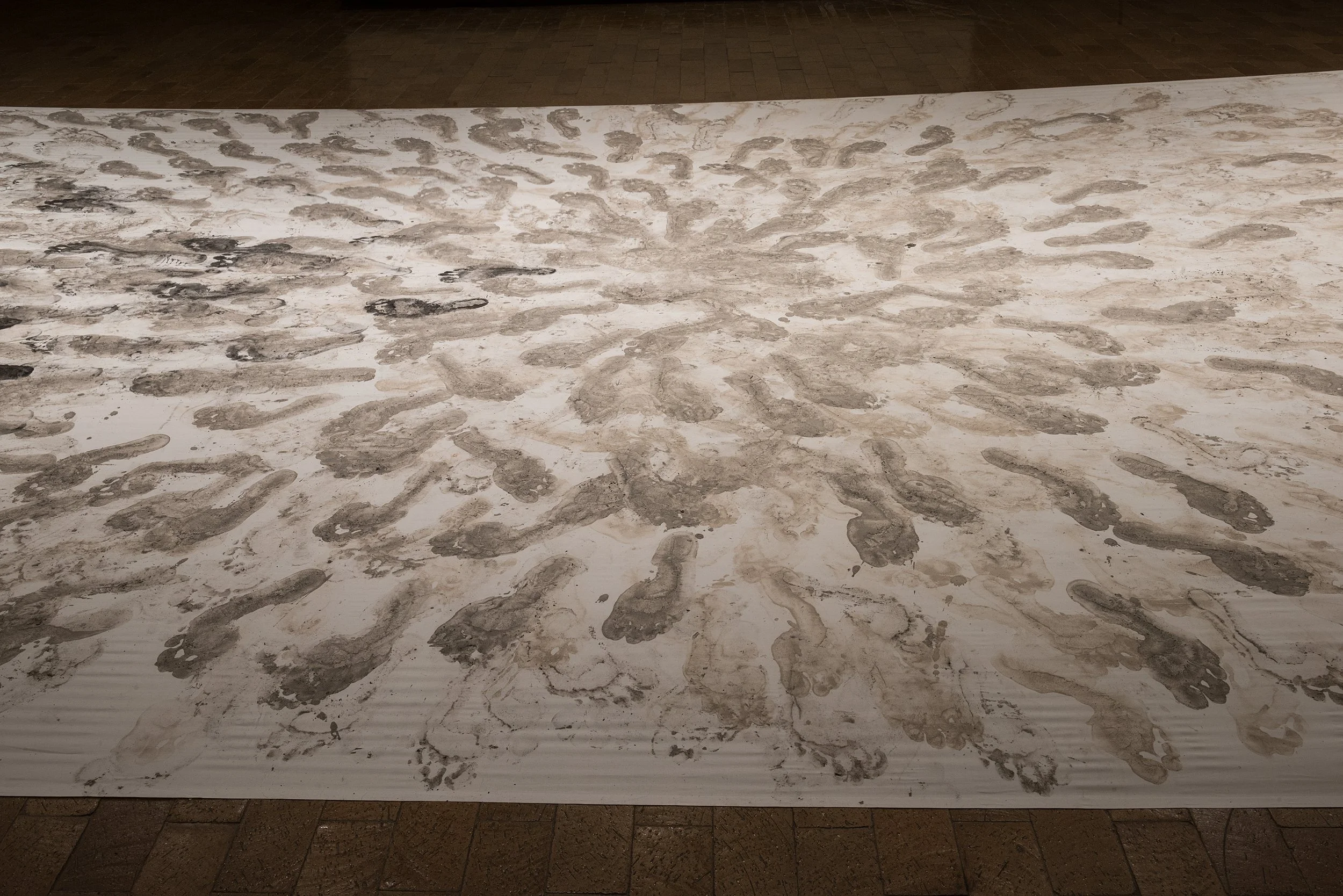
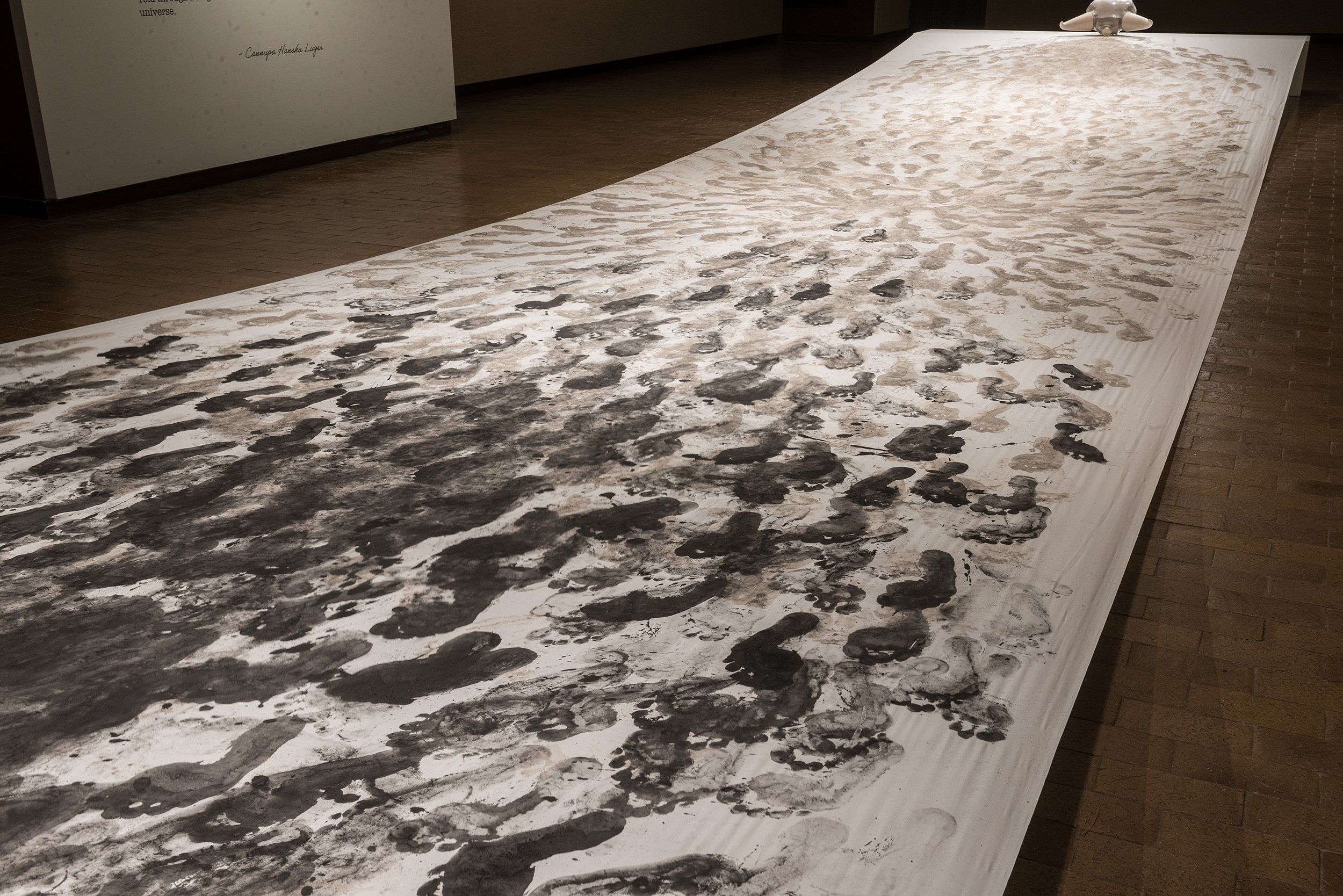
In the new large-scale installation Transmutation, calcium carbonate and bone-black pigments are encased in lifesize glass Buffalo skulls acknowledging the attempted annihilation of the American Bison, a species lost a hundred years ago and with lasting effects in the 21st century.